Active - 2026
AgentBoard
A local multi-agent delivery board that routes work through PM, Worker, Reviewer and Human approval roles with visible costs and audit trails.
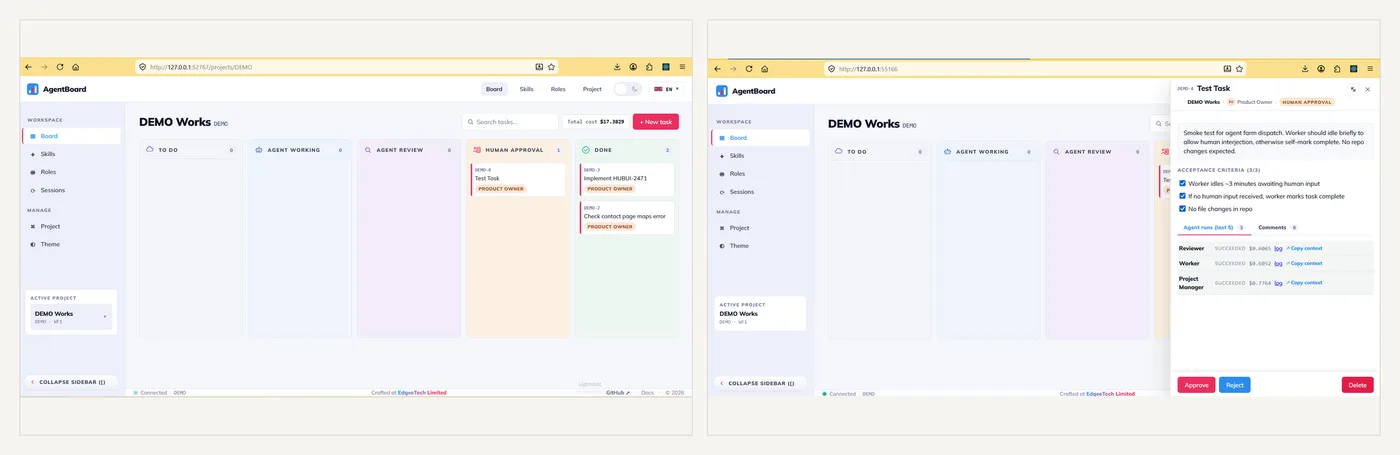
Why It Exists
AgentBoard is built around a problem that shows up quickly once AI agents move beyond experiments: the work becomes hard to supervise. A single chat transcript is not enough when multiple agents are drafting scope, editing files, reviewing output, retrying failed runs and waiting for a human decision.
The project turns that process into a local delivery board. Work moves through explicit roles, every run leaves a trace, and the human approval step remains visible instead of being hidden inside a terminal session.
Product Shape
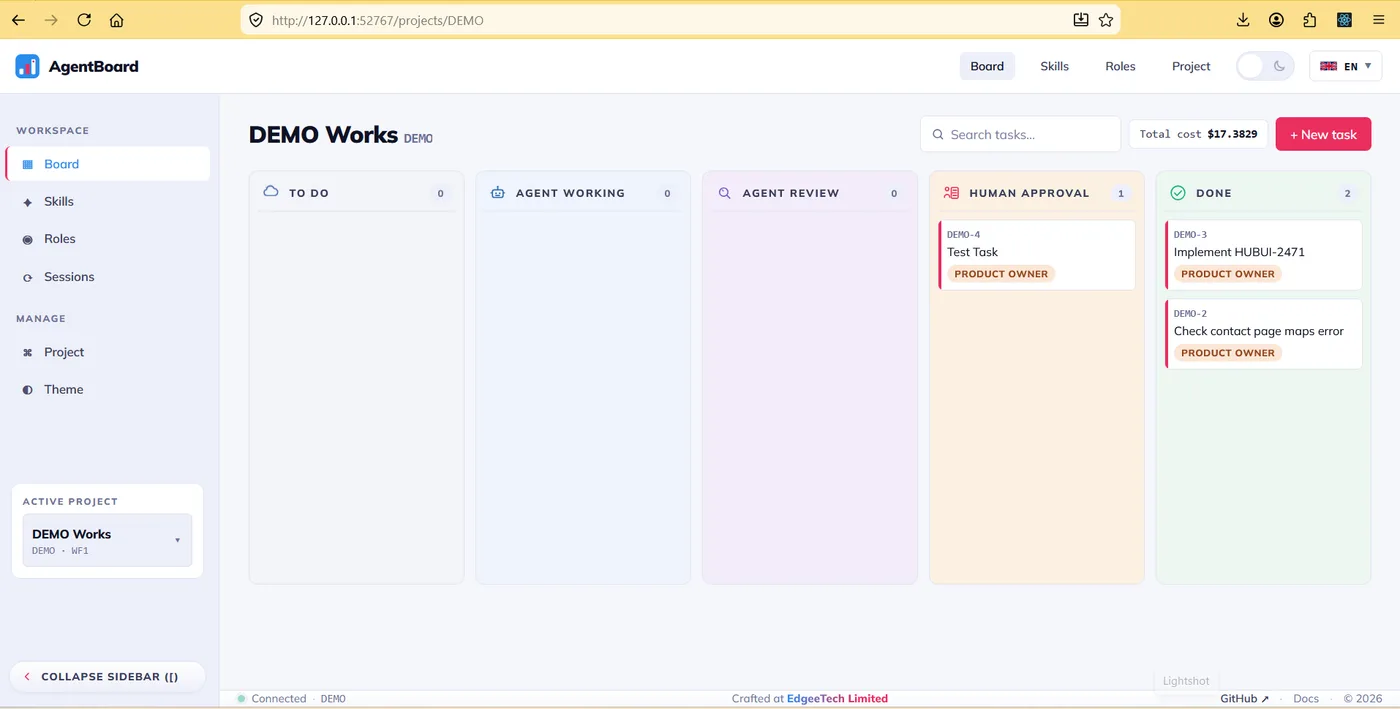
The board is organized around the actual delivery state of an agent task: to do, agent working, agent review, human approval and done. That makes it closer to an operating surface for AI-assisted engineering than a generic kanban clone.
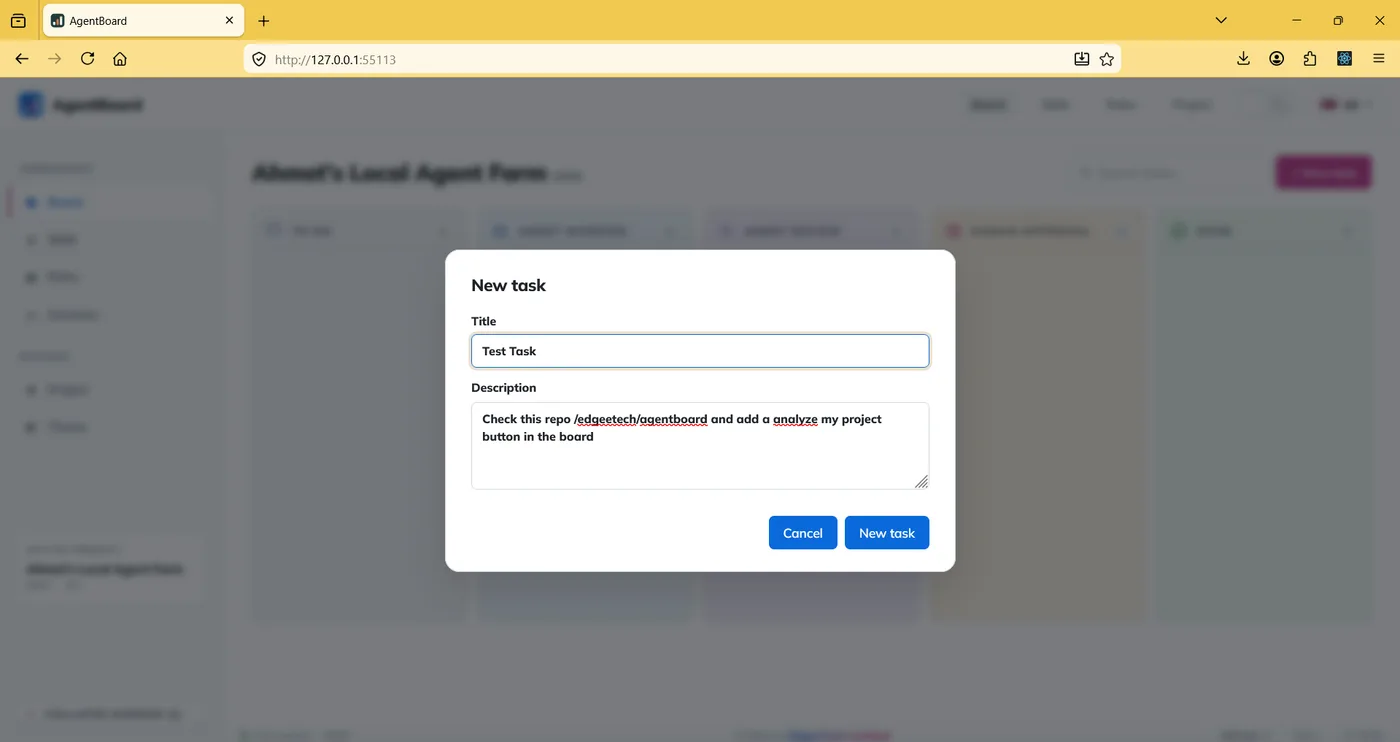
Creating work stays intentionally small: a title and a rough description are enough to start. The PM role can enrich the prompt, split scope and turn the request into acceptance criteria before implementation begins.
Verification Loop
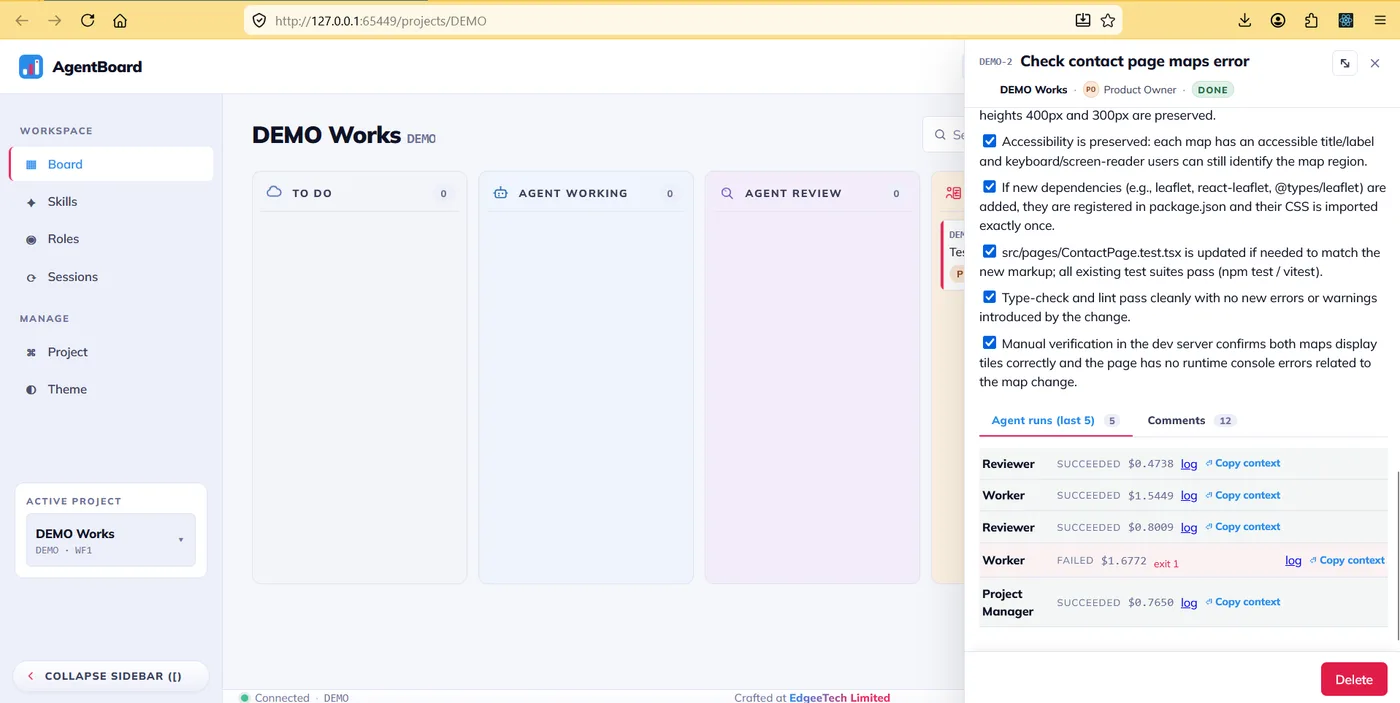
The most important part of the product is the handoff loop. Worker runs can produce implementation output, Reviewer runs can check acceptance criteria, and the final state still waits for explicit human approval or rejection.
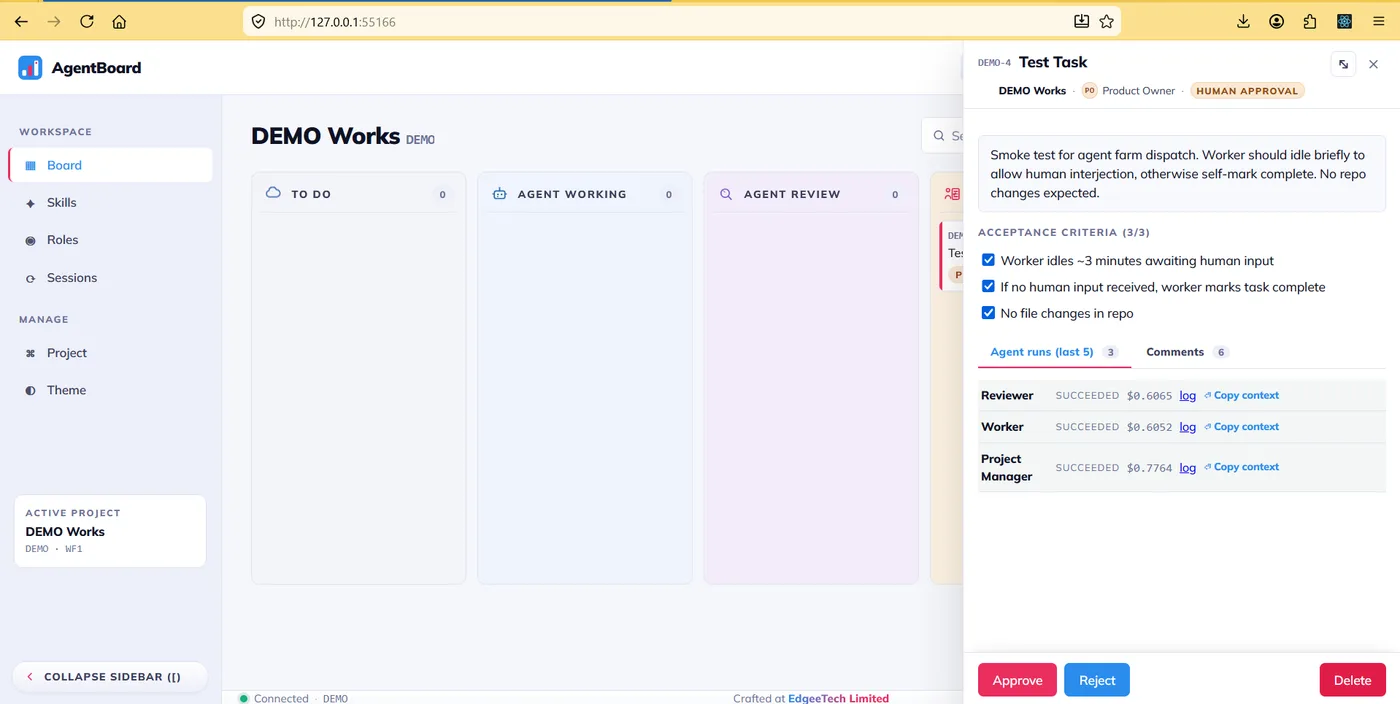
Comments and run history give the product an audit trail. That matters when an agent retries, partially completes work, or needs human direction before another pass.
Agent Model
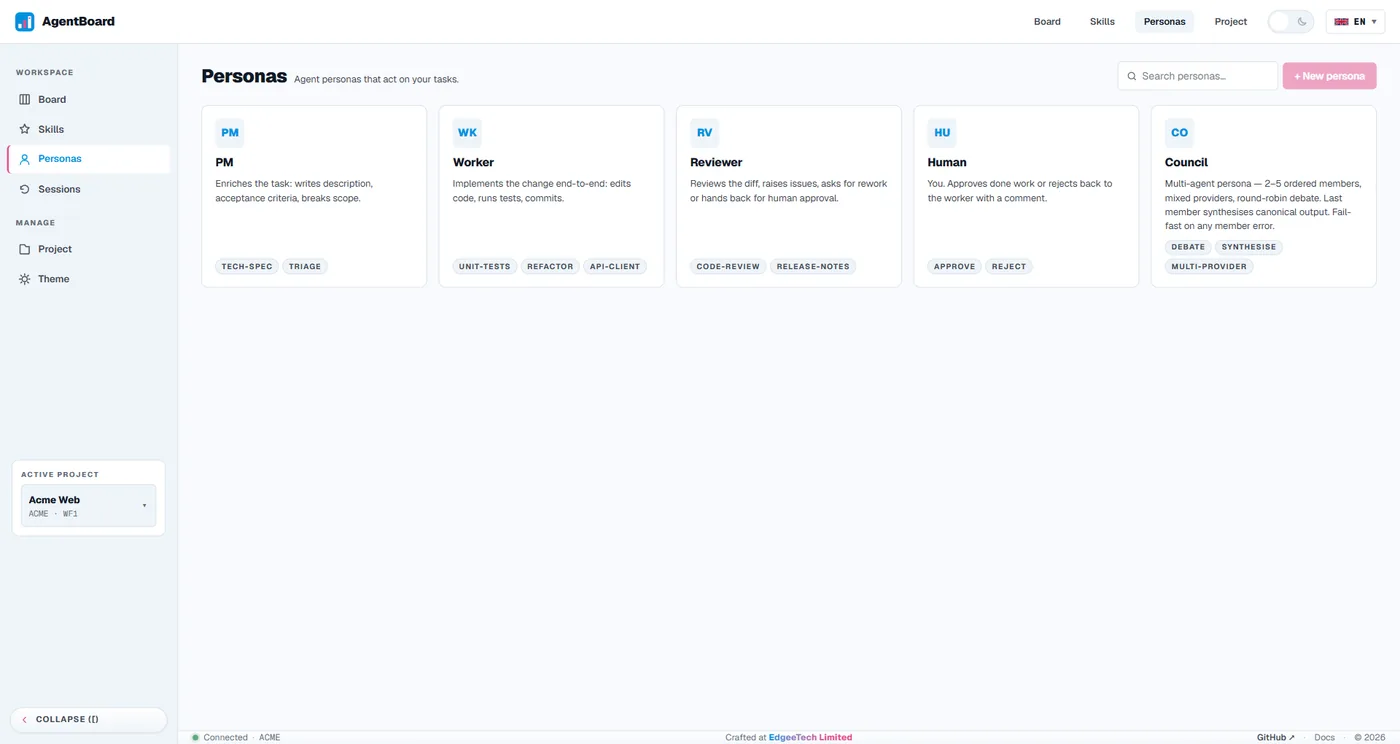
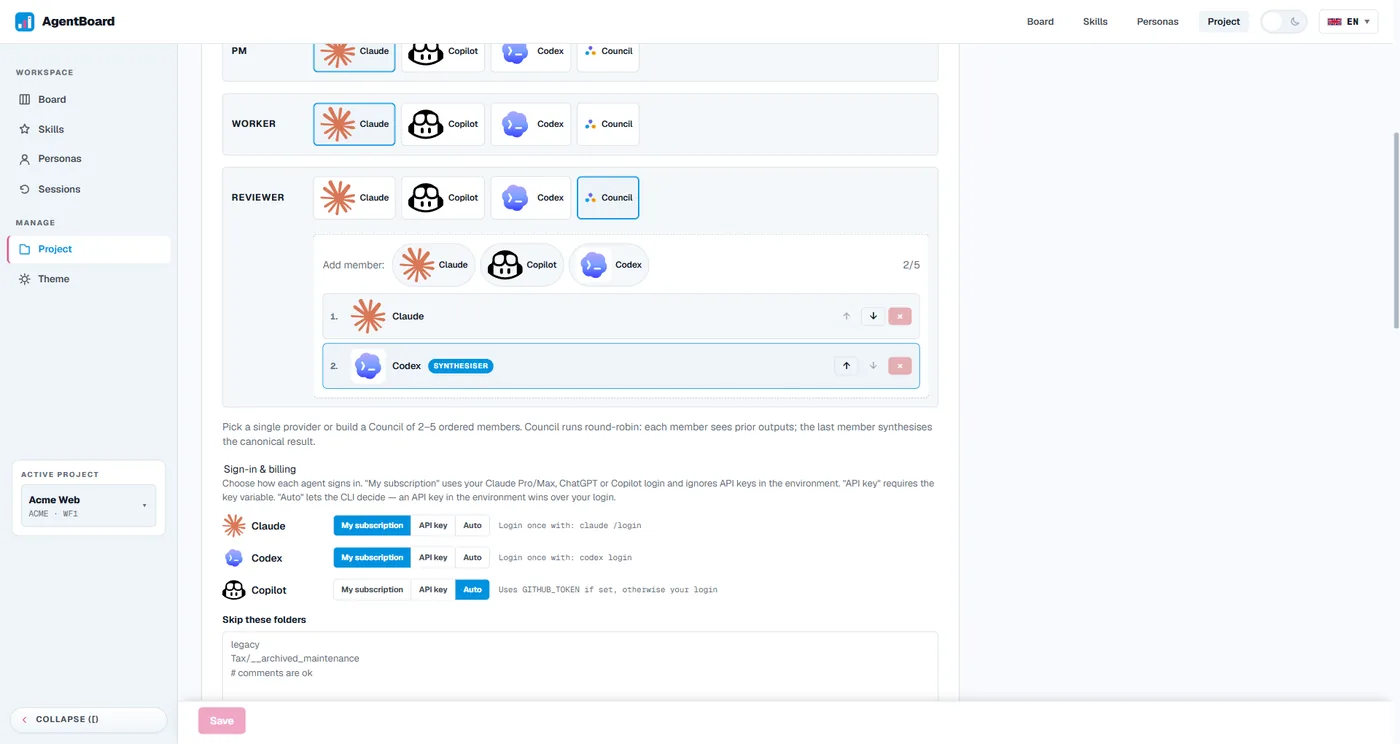
AgentBoard treats agents as configurable personas rather than a single assistant. PM, Worker, Reviewer and Human each have different responsibilities, and the system can route those responsibilities to Claude Code, Codex CLI, Copilot CLI or future executors. Any role can also be a council: two to five agents from different providers debate in turn, and the last one writes the final result.
Your Subscription, Not a Surprise Bill
Most people who try agent tools already pay for Claude Pro/Max, ChatGPT or Copilot. AgentBoard lets each provider sign in with that subscription instead of an API key. In that mode the run’s environment drops the provider’s API-key variables, so a key left in a shell profile cannot silently switch the work to pay-as-you-go billing. Each run records how it actually signed in, and the doctor check warns when an API key would override a login.
Architecture Notes
The implementation is deliberately local-first. The server runs on Node.js, stores project state in SQLite and exposes a local HTTP API for board, task, run, skill and session operations. Spawned agents never receive the server’s own token: each run gets a token that only works for its own task, and every part of a compound shell command is checked against the tool policy. The UI is built with React and Vite, with live agent activity streamed back into the board.
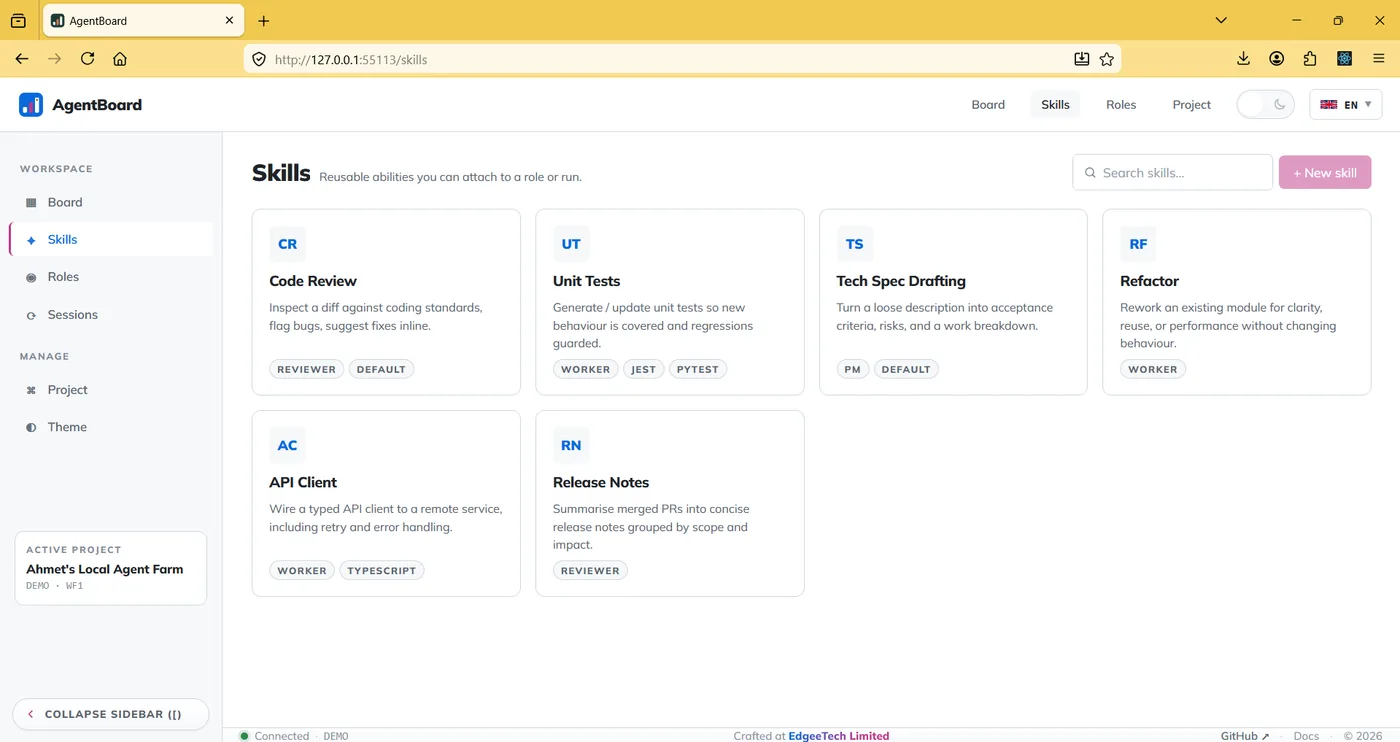
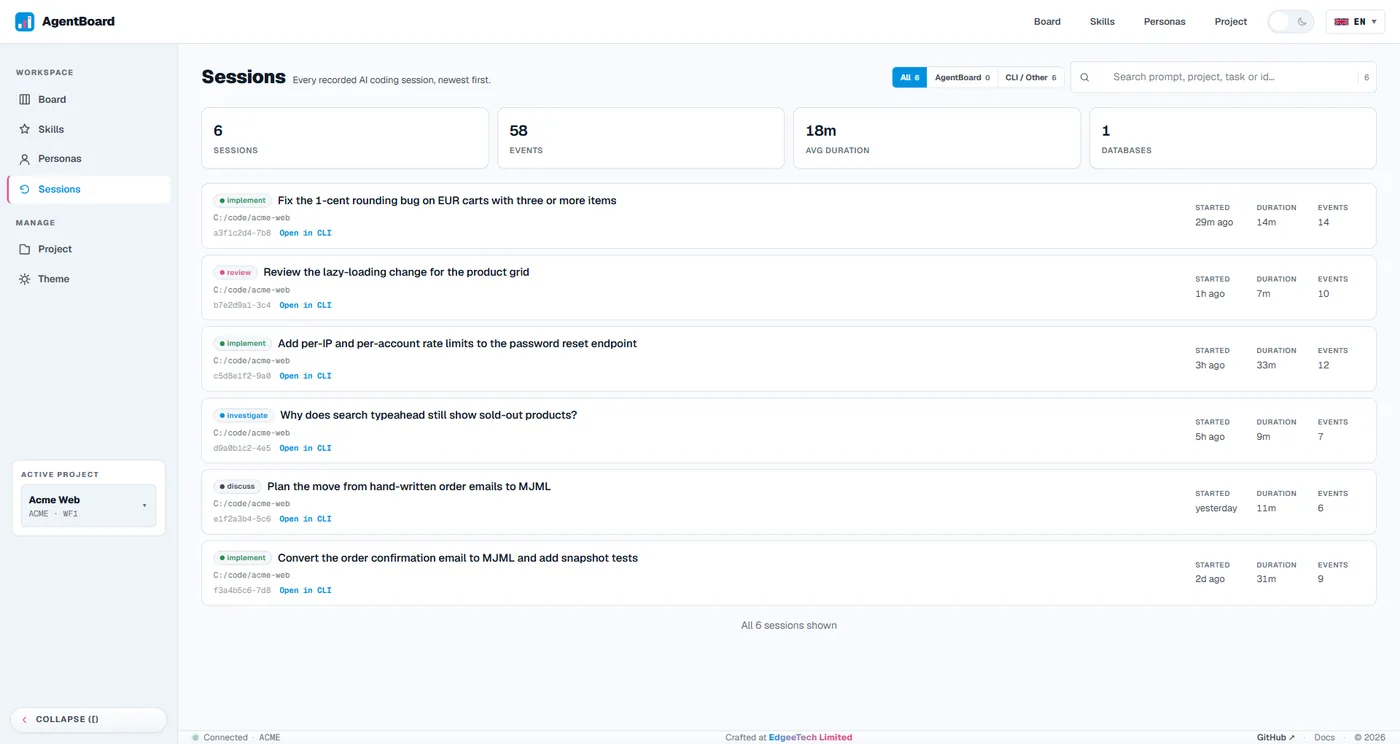
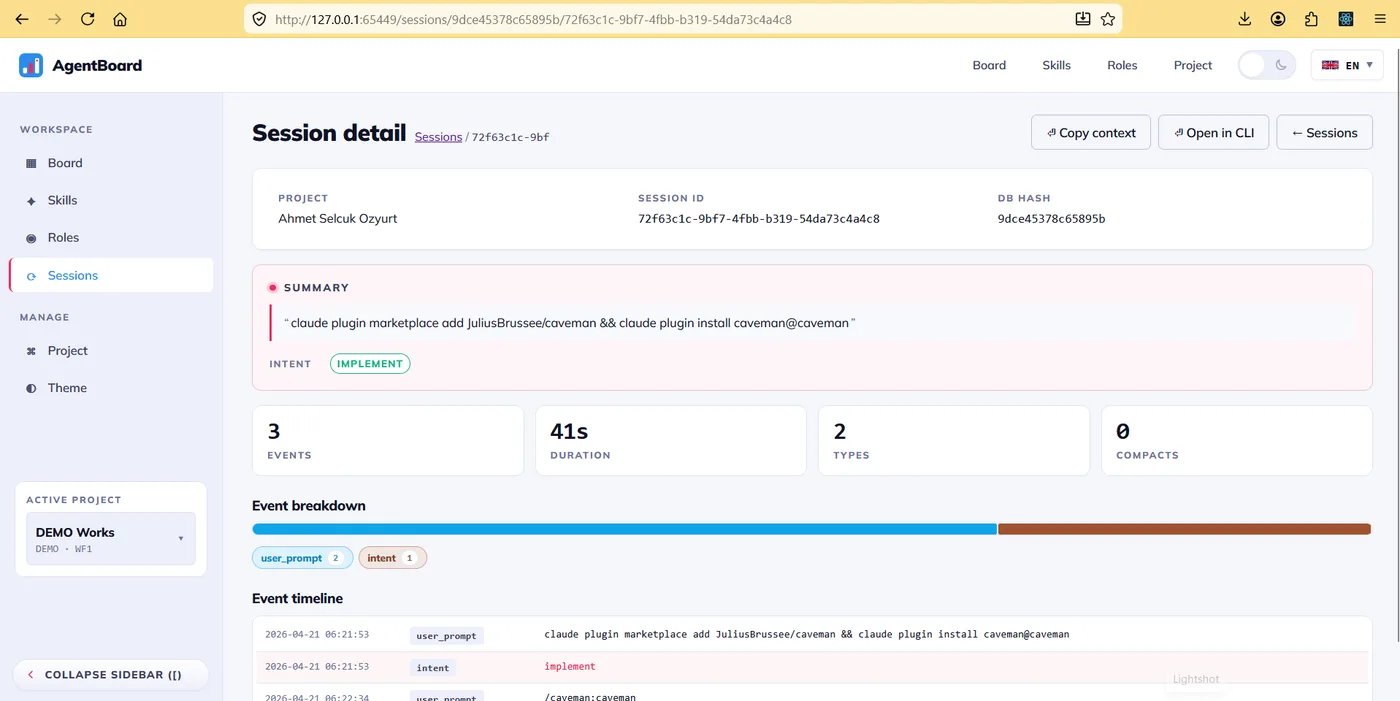
Session history is a first-class part of the product. Every recorded coding session is searchable by prompt, project or task. A session can be inspected after the fact, copied back into context, or opened from the CLI when deeper debugging is needed.
What I Like About It
The interesting design choice is that AgentBoard does not try to make agents feel magical. It gives them operational boundaries: role ownership, acceptance criteria, visible cost, retry limits, review states, scoped credentials and human approval. That is the difference between “an AI wrote some code” and “an AI-assisted delivery process can be inspected and improved.”