Writing
Building software with AI agents
A practical framing for using coding agents without giving up architecture, review or accountability.
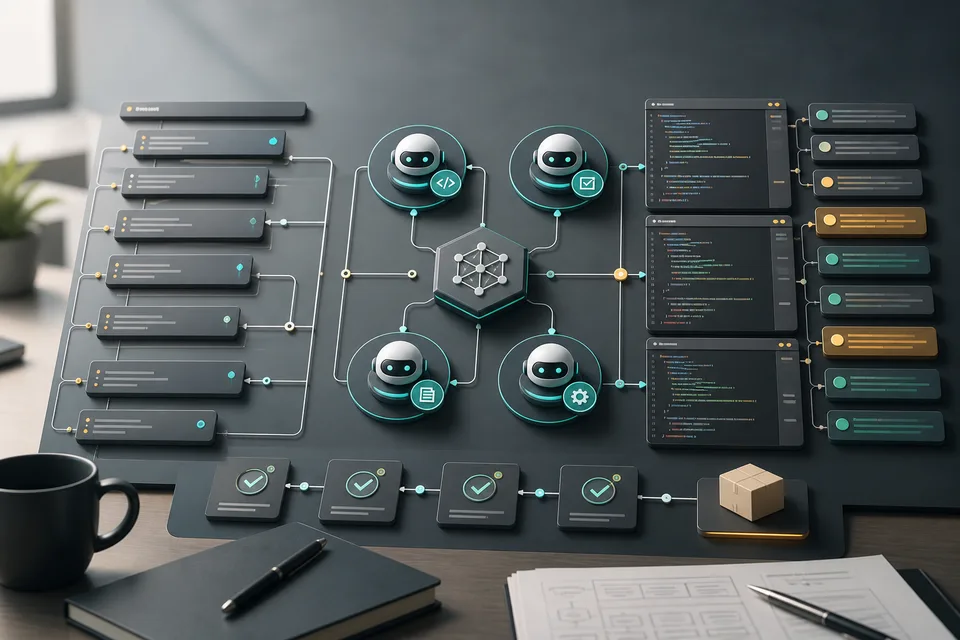
AI coding agents are most useful when they become part of the engineering system, not when they sit beside it as a novelty.
The productive pattern is not “let the model do everything”. It is closer to a tight delivery loop:
- A human frames the goal and constraints.
- The agent researches the codebase and proposes a path.
- Implementation happens in small, reviewable changes.
- Tests, type checks and CI decide whether the change is real.
- A human reviews the result and owns the final decision.
What Changes
The center of gravity moves from typing code to designing the work. Better task boundaries, clearer repository knowledge and sharper quality gates become more valuable because agents amplify both clarity and ambiguity.
What Should Not Change
Architecture still needs judgment. Security still needs explicit control. Production deployment still needs accountability. AI can accelerate implementation, but it should not erase ownership.
The Practical Goal
The goal is a system where agents handle the repetitive investigation and scaffolding while engineers stay focused on the parts that require taste, context and responsibility.